
The Church Speaks
Headstones on the vaults of the altar room of St. Olaf Church
Like messengers from a distant era, the headstones on the ceiling of the current altar room have come to us. They origin from the church that stood here before the 15th-century reconstruction.
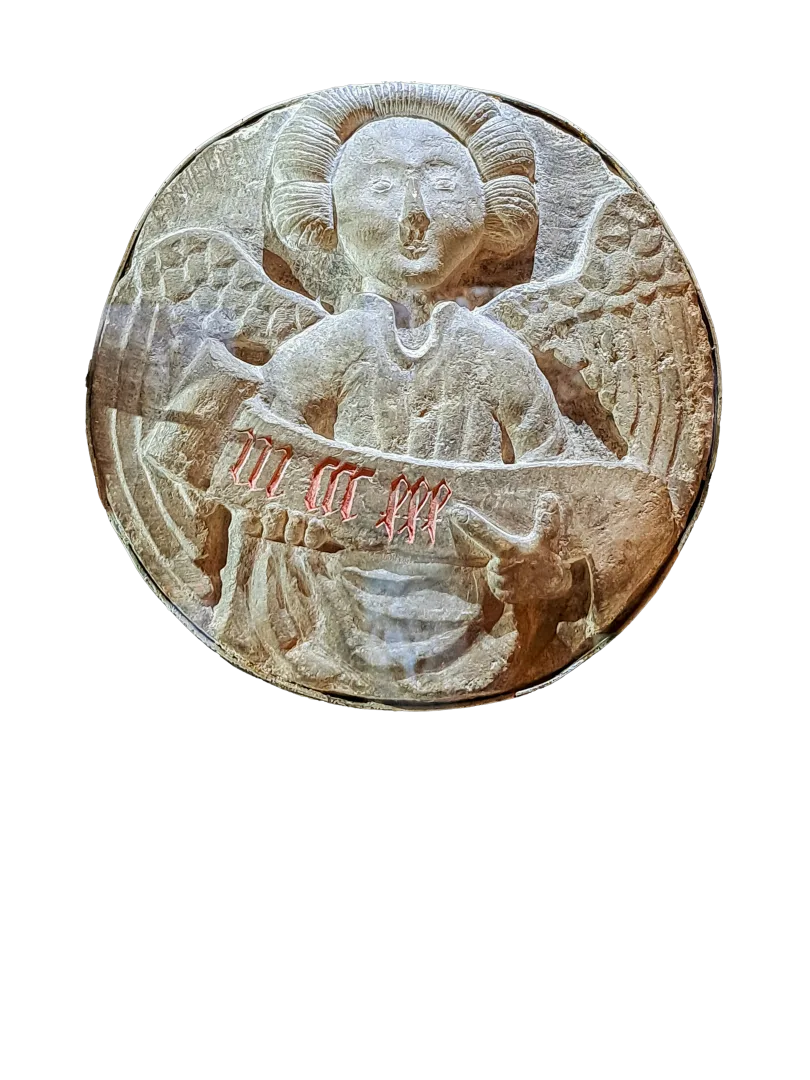
The headstone with the image of an angel symbolizes the evangelist Matthew. It is believed that the number MCCCXXX (1330 AD), to which the angel's finger points, denotes the year the church was completed.
The angel stone fell from the vault of the altar room during the fire of 1820, and is now in the History Museum.
Important messages from headstones
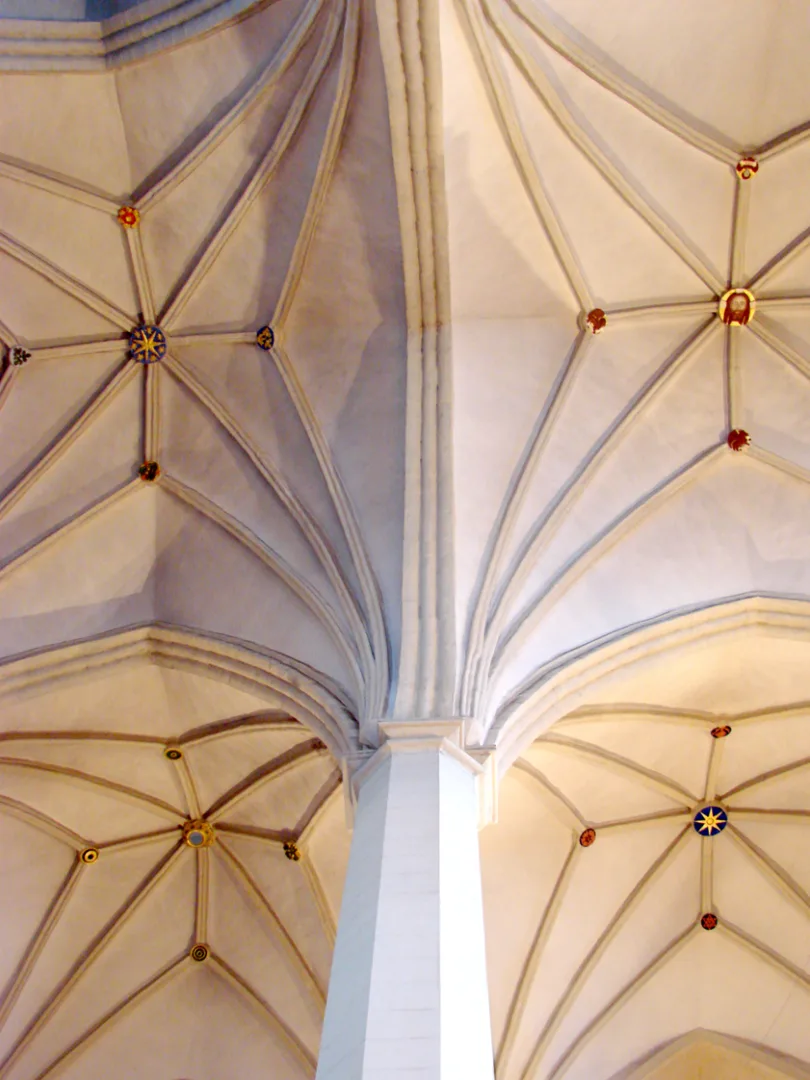
The church ceiling is a metaphor for heaven. In Estonian, there is even the same word for both: vault. From there, a complete, well-thought-out system emerges, a narrative that is largely based on the text of the Book of Revelation.
The central aisle of the altar room consists of three vaults.
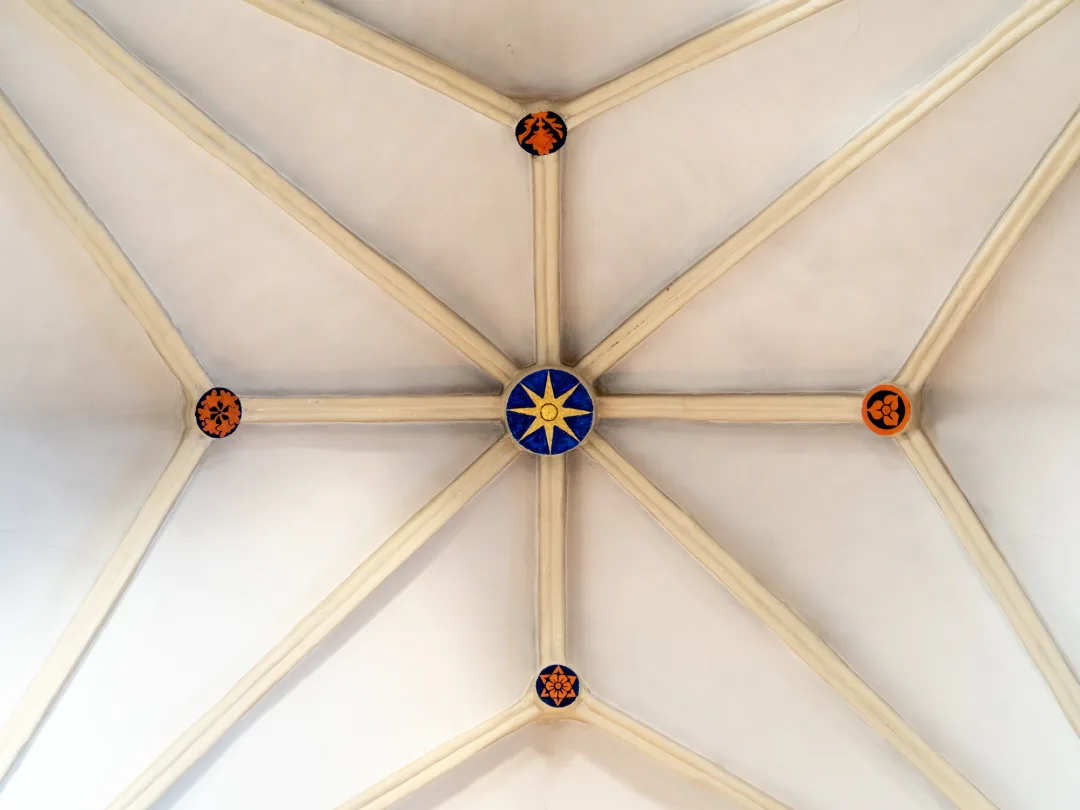
The first arch is topped by a golden eight-pointed star. This is the so-called star of the new era. God created the world in seven days, but Christ's redemptive work, as a new page in human history, began to be considered the eighth day of creation.
In addition to the symbolism of shapes, the symbolism of numbers was also very important for people in the Middle Ages. Seen in a larger context, the entire ceiling with its octagonal star vaults is a symbol of the Creator's love and mercy.
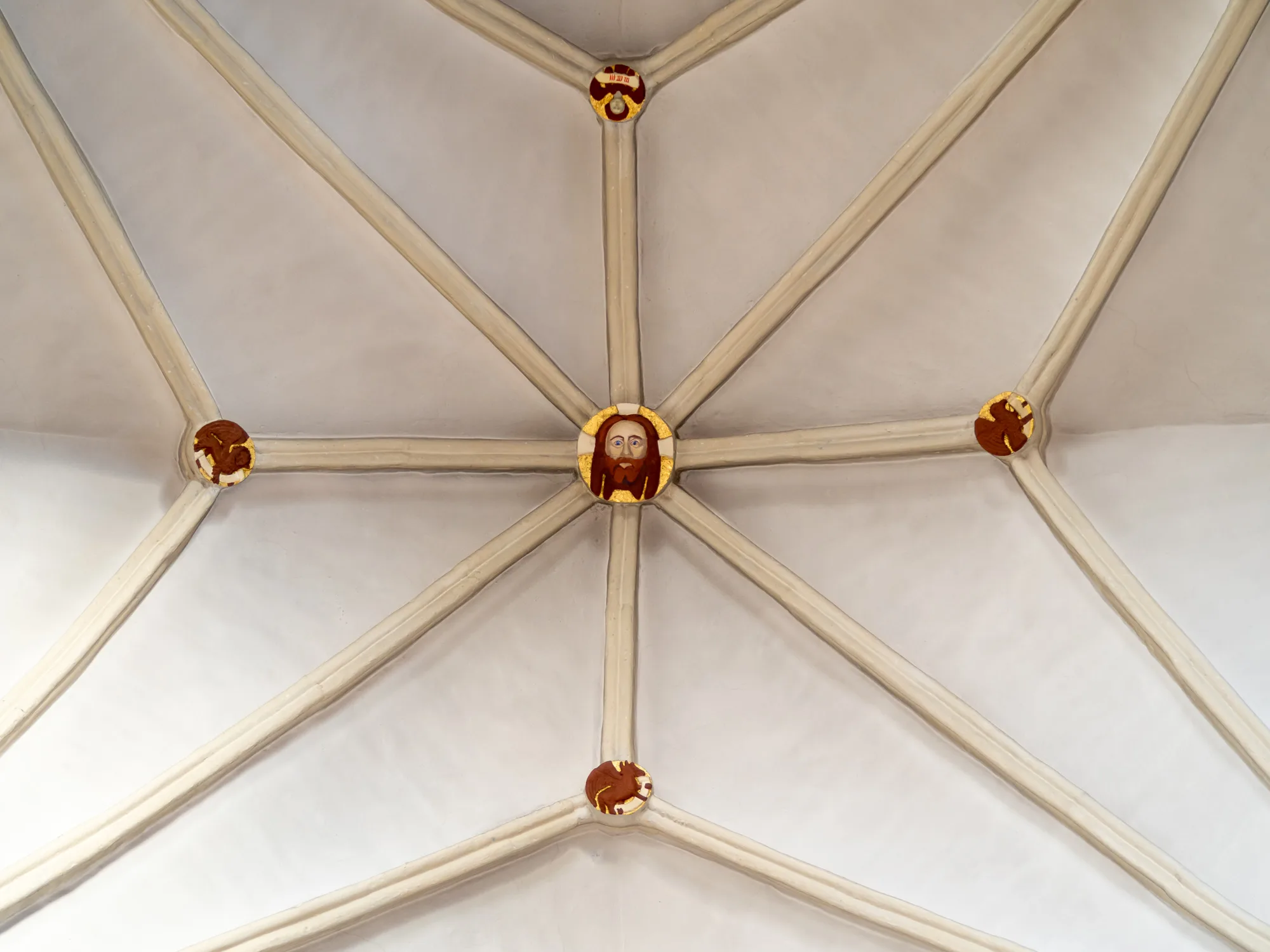
In the most important, central vault of the central nave, above the altar, the keystone of the vault center has the face of Christ. He is surrounded by four smaller keystones, which depict four creatures known from the Book of Revelation, symbolizing the four evangelists. The one closest to the altar is the already mentioned angel with the year number.
The Star of the New Age, the Sacred Seven, and the Crown of Victory
In the middle of the first vault of the south aisle is a gilded crown - to remind us of the crown of honor waiting in heaven, prepared for the victors. The second vault is topped by a keystone depicting one large star surrounded by seven small stars. The idea comes from the Book of Revelation, where Christ says: "I am the bright morning star", and John adds: "he held the seven stars of heaven in his hand... which mean the seven churches."
Seven was a special number of perfection, so the message of the headstone should be understood as: Christ keeps his church and it is perfectly holy. The small headstones in the south aisle have vines and clover leaves - the latter being used by St. Patrick of Ireland to explain the nature of the Trinity.
If we look up at the ceiling of a church, our eyes see only tiny ceiling decorations high up. But when we delve deeper, they turn out to be icons of a kind - clicking on them opens a window, and then new ones and new ones. Above us is a creed carved in stone.
Saint Olav behind the altar
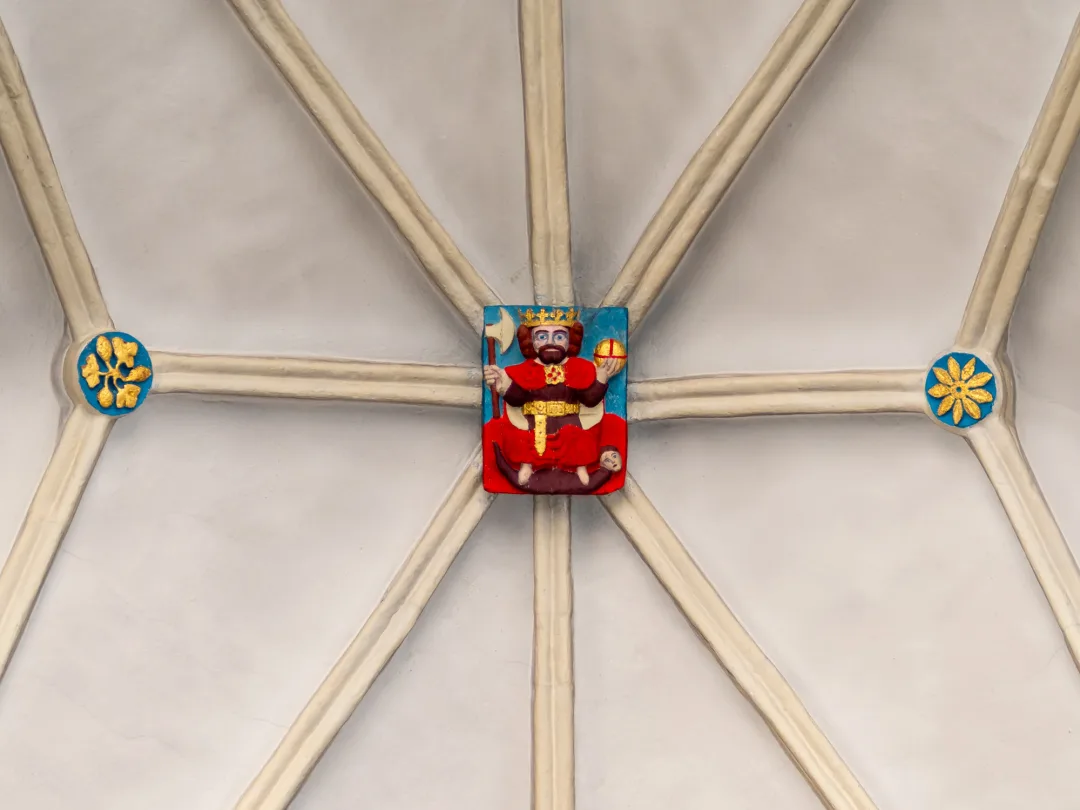
The third vault of the central nave is behind the altar. The area behind the altar is considered the area of those who have already departed from this earth. A large stone slab with the image of St. Olaf is built into the center of this vault. It is one of the oldest carved stone art pieces in Estonia.
It may have previously decorated an older sacral building, or it may have been commissioned in the 15th century specifically for the new altar room.
The king, enthroned in a static pose, holds a short battle axe in his right hand and an orb in his left, and a crowned dragon lies at his feet, symbolizing the paganism conquered by King Olaf.
In the small vaults surrounding Olaf, there are small keystones with lilies at the intersections of the ribs, symbolizing faith.
The holiness of the Church
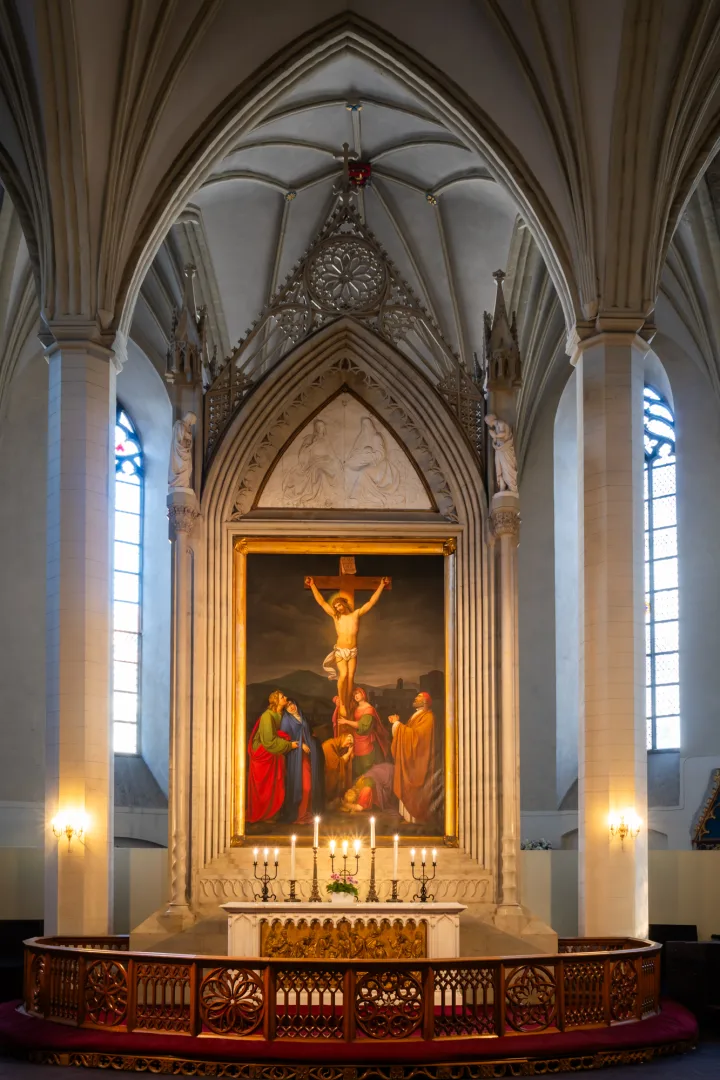
The altar room of the church is built facing east – it points to the sunrise. The altar room is separated from the nave by a triumphal arch – Christ's victory on the cross opened the way to God.
Sculptures, paintings, and stained glass windows in the church also told stories about sacred history.
The Cistercians have a story about two travelers, one of whom was an evil spirit in human form, and wanted to mislead the pious traveler. The men arrived at the church while talking, and the traveler, as was his custom, went to “greet the church.” The companion waited outside. However, the church was a very holy place, where one was in the presence of God. When the man came out, the companion did not recognize him and continued to wait. Why? – the man had been transformed by the presence of God.
The windows speak
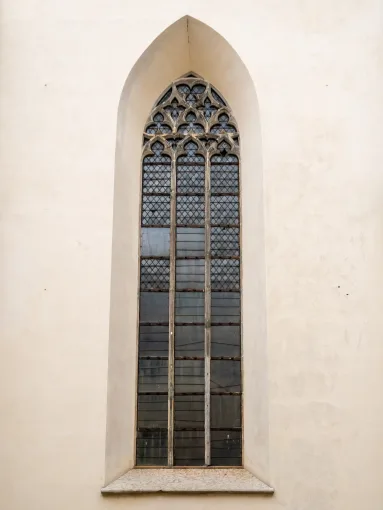
A church window is not like a homely room window, from which it is simply nice to look out. The windows of old Gothic churches were originally like Bible stories. Nature or the roofs of the old town were not visible from the church window. Instead, there were glass paintings, stained glass windows. The stained glass window itself is like a symbol. It is not visible at night, but when the sun rises, the painting on the window begins to shine. In the old days, people knew how to read them. How were windows read? Church windows were read from left to right, like a book, but also from the bottom up. The largest picture was at the top. Church windows cannot be read well from the outside. Jesus’ teaching is understandable to those who are in His kingdom and want to follow Him.
The best sermon I ever heard at St. Olaf's Church was preached by the unforgettable Edgar Rajandi in the empty church. We were alone there, and the old brother said to me: "Arpad, can you find two identical windows in this church?"
I let my eyes wander over the tall Gothic windows of the church and could find no two identical ones. The ornamentation on the windows was unique everywhere.
"There are many windows in the church of Christ, but there is only one light - Christ. We all need to seek this light and be transparent. The cleaner the window, the more transparent the light. We need to show the world this light of life, not the special teaching of our denomination!" said Rajandi.
Edgar Rajandi has now passed into eternal light, but the windows of St. Olaf's Church remind me again and again of his sermon.